

OSHA’s Multi-Employer Citation Policy: What General Contractors Should Know
Construction sites routinely bring employees of several companies into the same work area. That creates an important compliance question: if OSHA finds a hazardous condition, can more than one employer be cited?
Under OSHA’s Multi-Employer Citation Policy, the answer can be yes. OSHA uses a two-step analysis and recognizes four employer roles: creating, exposing, correcting and controlling. An employer may fit more than one role, and the analysis depends on the actual facts.
This matters to general contractors because a GC with general supervisory authority may qualify as a controlling employer even when its own employees are not the workers directly exposed to the hazard.
This article explains OSHA’s published policy for construction teams. It is educational information, not legal advice, and OSHA enforcement decisions are fact-specific.
What is OSHA’s Multi-Employer Citation Policy?
OSHA’s official Multi-Employer Citation Policy says that on multi-employer worksites more than one employer may be citable for a hazardous condition that violates an OSHA standard.
The policy uses two steps:
- Determine whether the employer is a creating, exposing, correcting or controlling employer.
- If it fits one or more roles, determine whether the employer took sufficient steps to meet the obligations associated with that role.
The policy is not a rule that the GC is automatically cited whenever a subcontractor violates an OSHA standard. OSHA evaluates the employer’s role and conduct.
The four employer roles
Creating employer
The creating employer is the employer that caused a hazardous condition that violates an OSHA standard.
For example, a contractor whose work creates an unprotected hazard may fall into this category even if another employer’s workers are the people exposed.
Exposing employer
An exposing employer is one whose own employees are exposed to the hazard.
If the exposing employer did not create the condition, OSHA’s policy considers factors such as whether it knew or should have known of the hazard and what protective steps it could reasonably take.
Correcting employer
A correcting employer is responsible for correcting a hazard. On construction projects this can arise where a contractor has responsibility for installing or maintaining a particular safety measure.
Controlling employer
This is the role especially important to GCs. OSHA defines a controlling employer as one with general supervisory authority over the worksite, including the power to correct safety and health violations itself or require others to correct them.
Control can arise from contract rights and, in some circumstances, from control exercised in practice.
Can a general contractor be cited for a subcontractor’s OSHA violation?
Potentially, depending on the facts. OSHA’s policy includes examples involving general contractors and subcontractors.
For a controlling employer, OSHA says the employer must exercise reasonable care to prevent and detect violations. The policy also states that the controlling employer’s reasonable-care duty is less than what is required of an employer protecting its own employees.
OSHA identifies factors relevant to reasonable care, including:
- project scale;
- the nature and pace of the work;
- how frequently hazards change;
- the controlling employer’s knowledge of the subcontractor’s safety history and practices; and
- the subcontractor’s level of expertise.
OSHA’s policy gives examples of measures such as periodic inspections, a system for promptly correcting hazards, and an effective graduated enforcement process with follow-up.
Why contract language matters—but is not the whole story
A GC’s subcontract can give it authority to require compliance and correction of safety violations. That authority can be relevant to controlling-employer status.
But OSHA also explains that control may sometimes be established through a combination of contractual rights or by the way authority is exercised in practice. A construction manager or GC should therefore not assume that a disclaimer alone determines OSHA’s analysis.
OSHA’s 2001 interpretation on controlling employers emphasizes that the assessment depends on the actual construction situation and the authority held by the parties.
What does “reasonable care” look like for a controlling employer?
There is no single inspection schedule that guarantees compliance for every project. OSHA’s policy expressly makes the frequency and closeness of oversight dependent on the circumstances.
A practical GC safety-management system may include:
Subcontractor prequalification
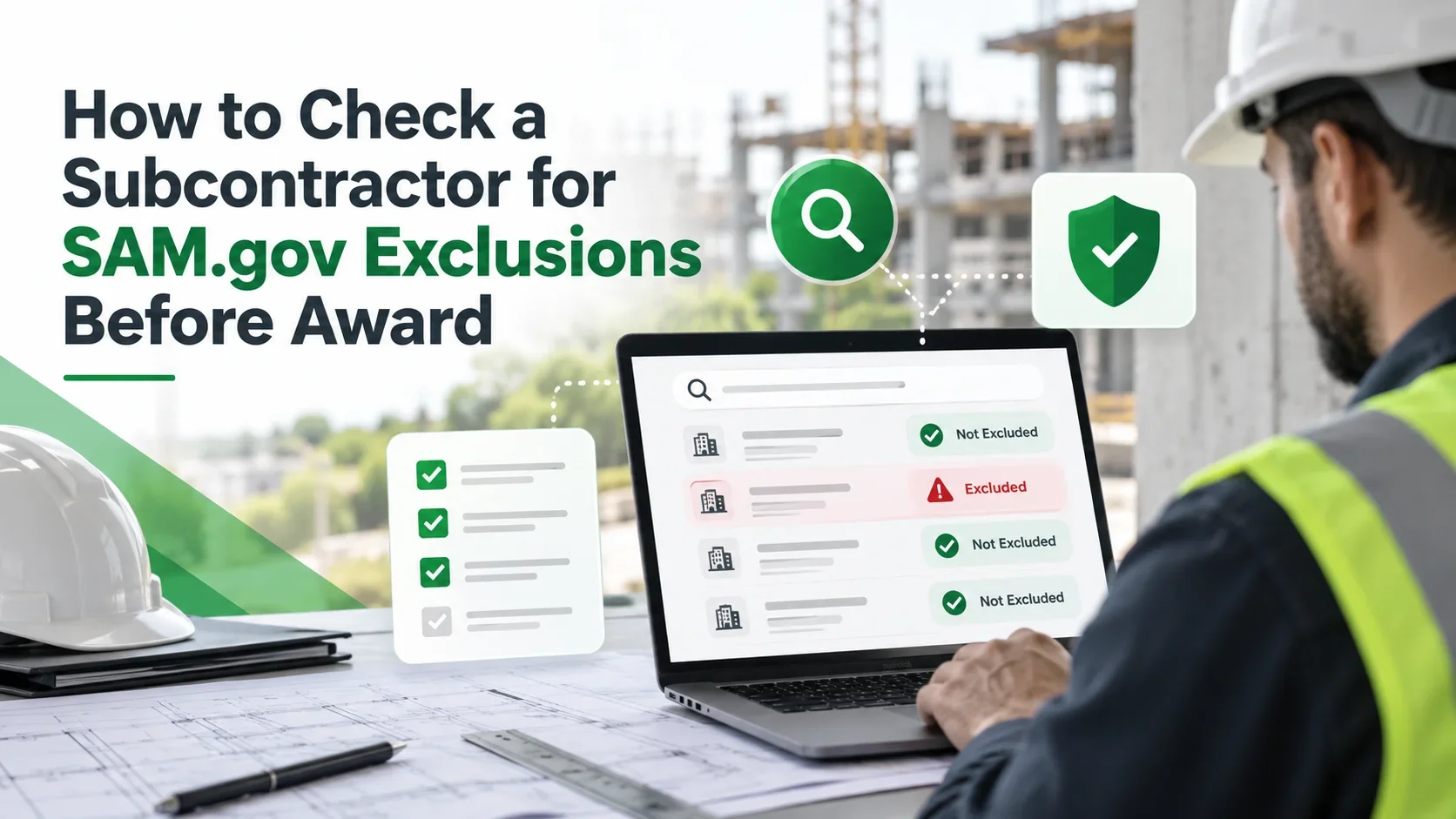
Review safety history and practices before award. This can include OSHA records, EMR information, written programs, training information and references where relevant to the project.
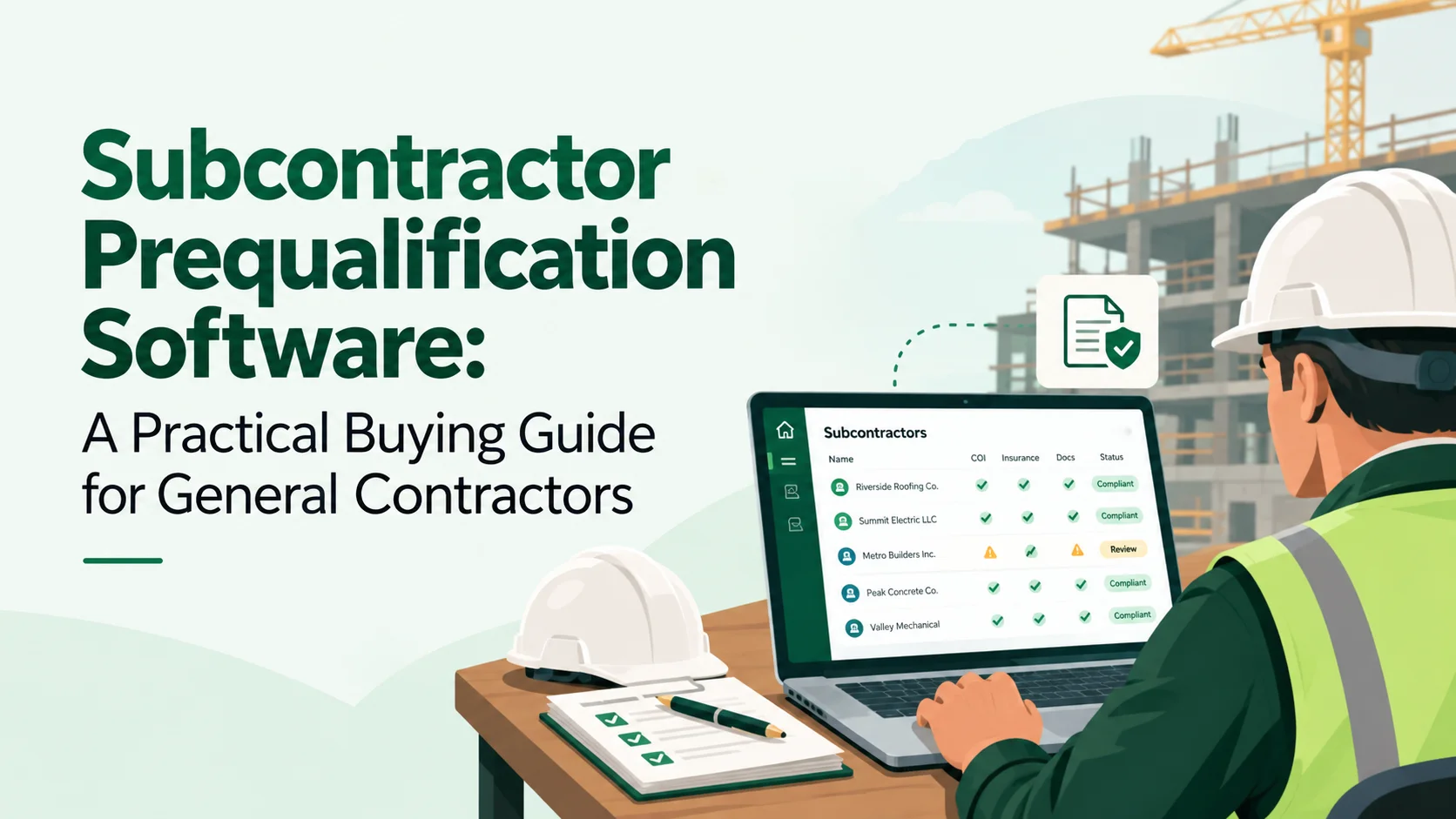
SubCada’s subcontractor prequalification guide provides a broader pre-award framework.
Defined safety requirements
The subcontract and project safety plan should clearly communicate responsibilities and required procedures.
Periodic site inspections
Inspections should reflect project scale, hazard profile, work pace and the subcontractor’s history and expertise. OSHA does not say that a controlling employer must inspect as frequently as the employer whose own workers are exposed.
Prompt correction process
When a hazard is identified, the GC should have a way to communicate it, assign corrective responsibility, verify correction and escalate when necessary.
Graduated enforcement
OSHA’s policy specifically discusses effective enforcement and follow-up. Depending on company policy and contract authority, escalation may progress from notice and correction through stronger contractual measures.
Documentation
Retain inspection records, notices, corrective actions, follow-ups and escalation history. Documentation should reflect what actually happened rather than being created merely to satisfy a checklist.
How safety prequalification connects to site oversight
Prequalification is not a substitute for site safety management. A subcontractor can have strong historical metrics and still create a hazard tomorrow. Likewise, one metric should not be treated as a complete measure of safety performance.
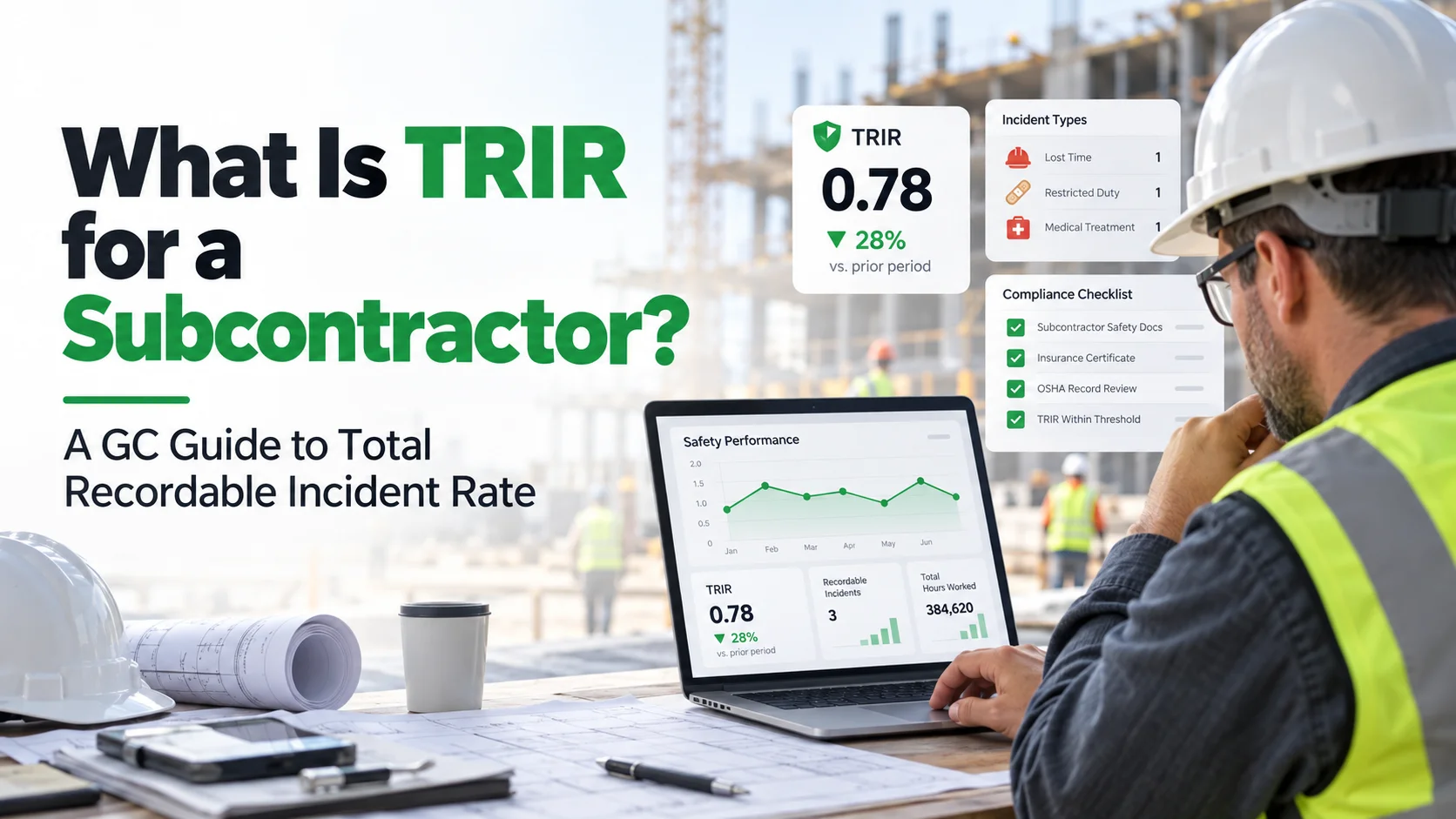
Useful prequalification records can nevertheless help a GC understand what level of oversight may be appropriate. OSHA’s controlling-employer policy specifically identifies knowledge of a subcontractor’s safety history and practices as a factor affecting reasonable care.
Related SubCada resources include:
These records can support a structured review, but none should be used as an automatic pass/fail decision without appropriate context.
A practical documentation checklist for GCs
A multi-employer safety compliance file may include, as appropriate:
- [ ] Subcontractor safety prequalification records
- [ ] Applicable written safety programs
- [ ] Project orientation records
- [ ] Contract safety requirements
- [ ] Site inspection records
- [ ] Hazard notices
- [ ] Corrective-action assignments
- [ ] Evidence of correction
- [ ] Follow-up inspections
- [ ] Escalation/enforcement records
- [ ] Safety meeting or coordination records
- [ ] Authorized exception documentation
The point is not paperwork for its own sake. The records should support an actual process for identifying and correcting hazards.
Common misunderstandings
“Only the employer whose worker is exposed can be cited”
That is not how OSHA’s multi-employer policy works. Creating, correcting and controlling employers may also have obligations even when their own employees are not exposed, depending on the circumstances.
“The GC is always responsible for every subcontractor violation”
Also incorrect. OSHA applies its role analysis and evaluates whether the employer met the obligations associated with its role. Enforcement is fact-specific.
“A contract disclaimer eliminates controlling-employer risk”
Not necessarily. OSHA looks at contractual authority and, in some situations, control exercised in practice.
“Collecting OSHA forms is enough”
Historical documentation supports prequalification, but it does not replace ongoing site oversight, hazard correction or the subcontractor’s responsibility for its own employees.
Where compliance software helps—and where it does not
Software cannot determine whether a GC is legally a controlling employer or whether OSHA would issue a citation. Those are legal and fact-specific questions.
What software can do is reduce administrative fragmentation. SubCada can help a GC keep subcontractor safety documents, expiration-sensitive requirements, prequalification records and review status in a consistent workflow rather than scattered across email threads and spreadsheets.
The safety team still needs to inspect the site, exercise professional judgment, correct hazards and enforce project requirements. The software’s role is visibility and documentation.
Frequently asked questions
What are the four employer categories under OSHA’s policy?
Creating, exposing, correcting and controlling employers.
Can an employer fit more than one category?
Yes. OSHA’s policy says an employer may have multiple roles.
Is a GC automatically a controlling employer?
No automatic conclusion should be made without the facts. General supervisory authority, contractual rights and control exercised in practice are relevant to OSHA’s analysis.
Does a controlling employer have to inspect constantly?
OSHA says the reasonable-care duty for a controlling employer is lower than the duty an employer has toward its own employees, and inspection frequency depends on project and subcontractor factors.
Does prequalification satisfy the GC’s OSHA obligations?
No. Prequalification can inform risk management, but it does not replace the site-specific steps required under applicable OSHA standards and the multi-employer policy.
Bottom line
OSHA’s Multi-Employer Citation Policy matters because construction safety responsibility can extend beyond the employer whose workers are directly exposed. GCs should understand the four employer roles, know how their contractual and practical authority affects the analysis, conduct appropriate oversight, use effective correction and enforcement systems, and keep accurate records of what they actually do.
For the controlling employer, the central concept is reasonable care—not automatic liability and not passive reliance on the subcontractor.