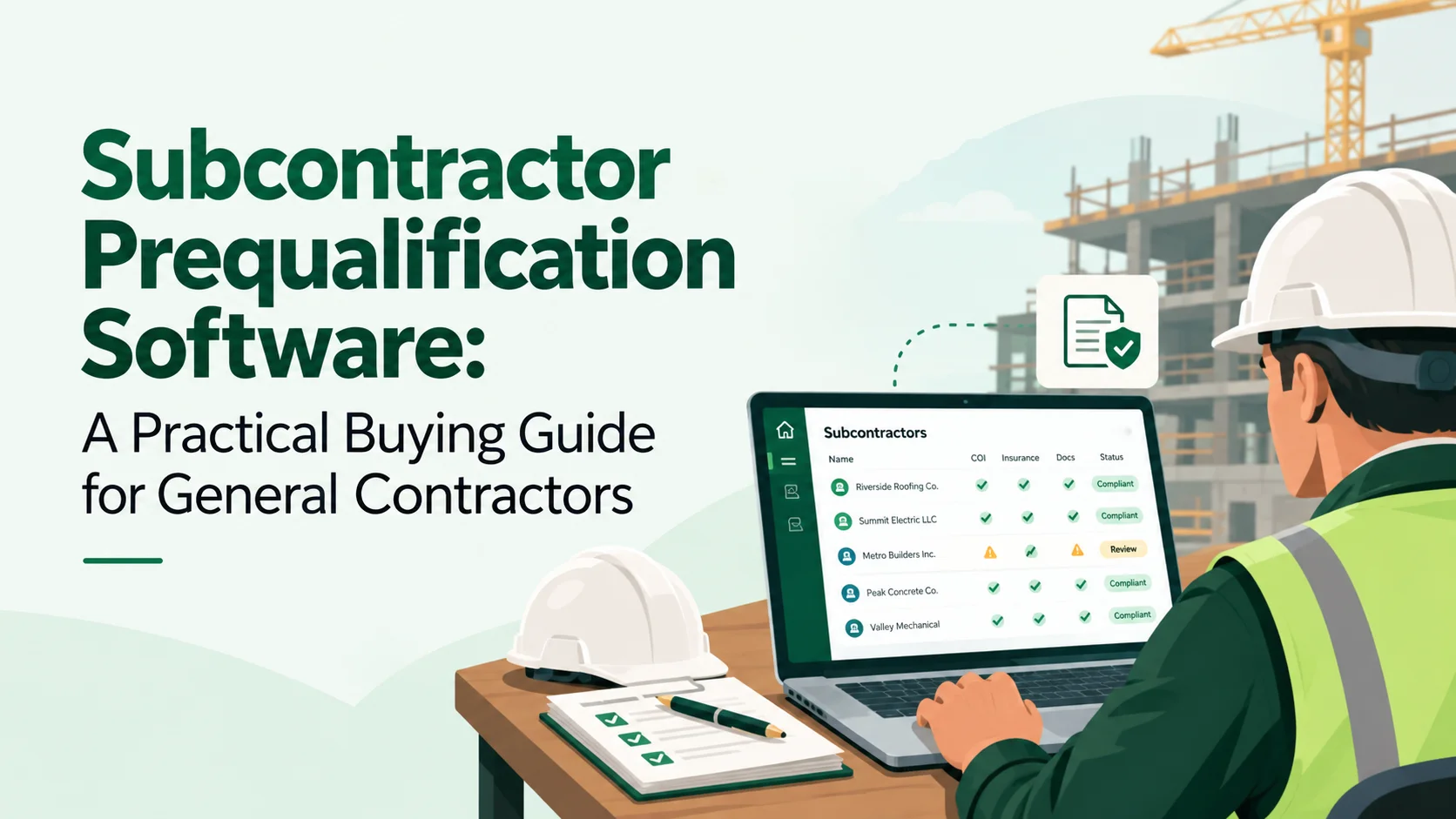
Learn how to compare subcontractor prequalification software for GCs, including questionnaires, safety, financials, documents, review workflows, requalification, and audit history.
A practical GC guide to OSHA’s multi-employer citation policy, including creating, exposing, correcting and controlling employers and what reasonable care can mean for site oversight.
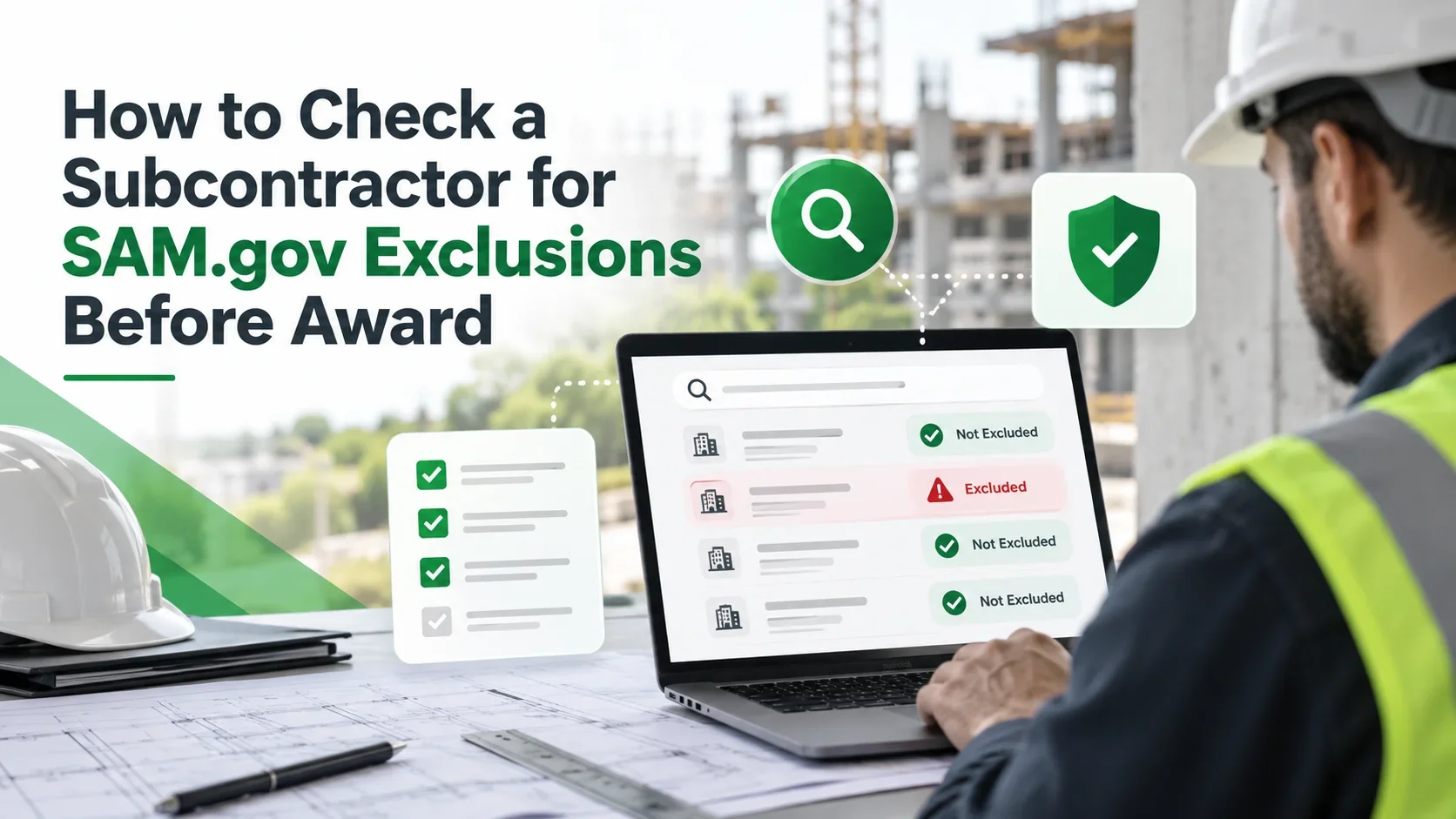
Learn when federal contractors need to consider SAM.gov exclusions, how to document a subcontractor exclusion check, and why federal-project rules require careful review.
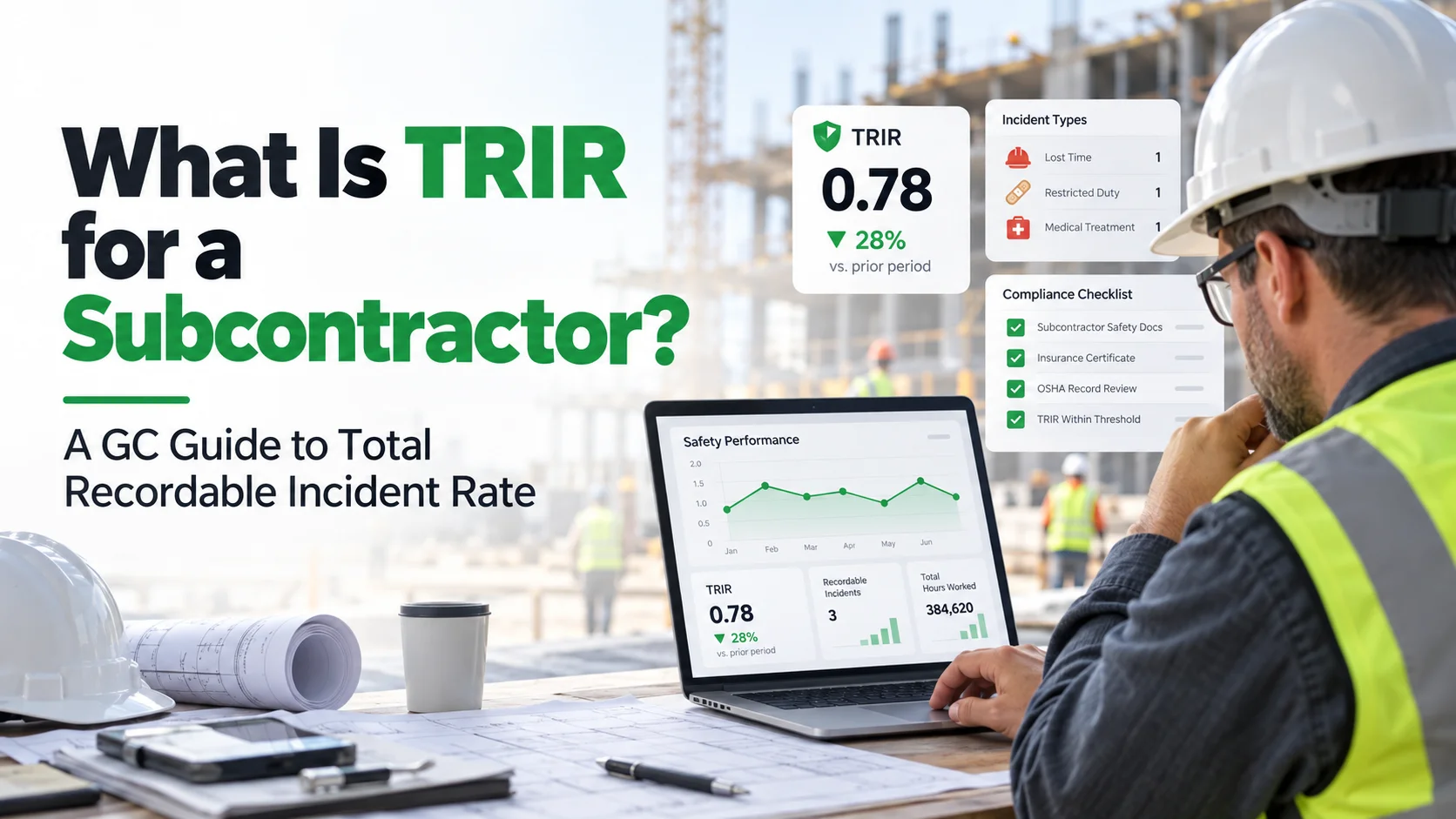
Learn what TRIR means, how the rate is calculated, how GCs can review subcontractor TRIR responsibly, and why it should be considered alongside other safety information.
A practical guide for general contractors on evaluating subcontractors before awarding work, including company credentials, licensing, insurance, safety, capacity, references, and documentation.
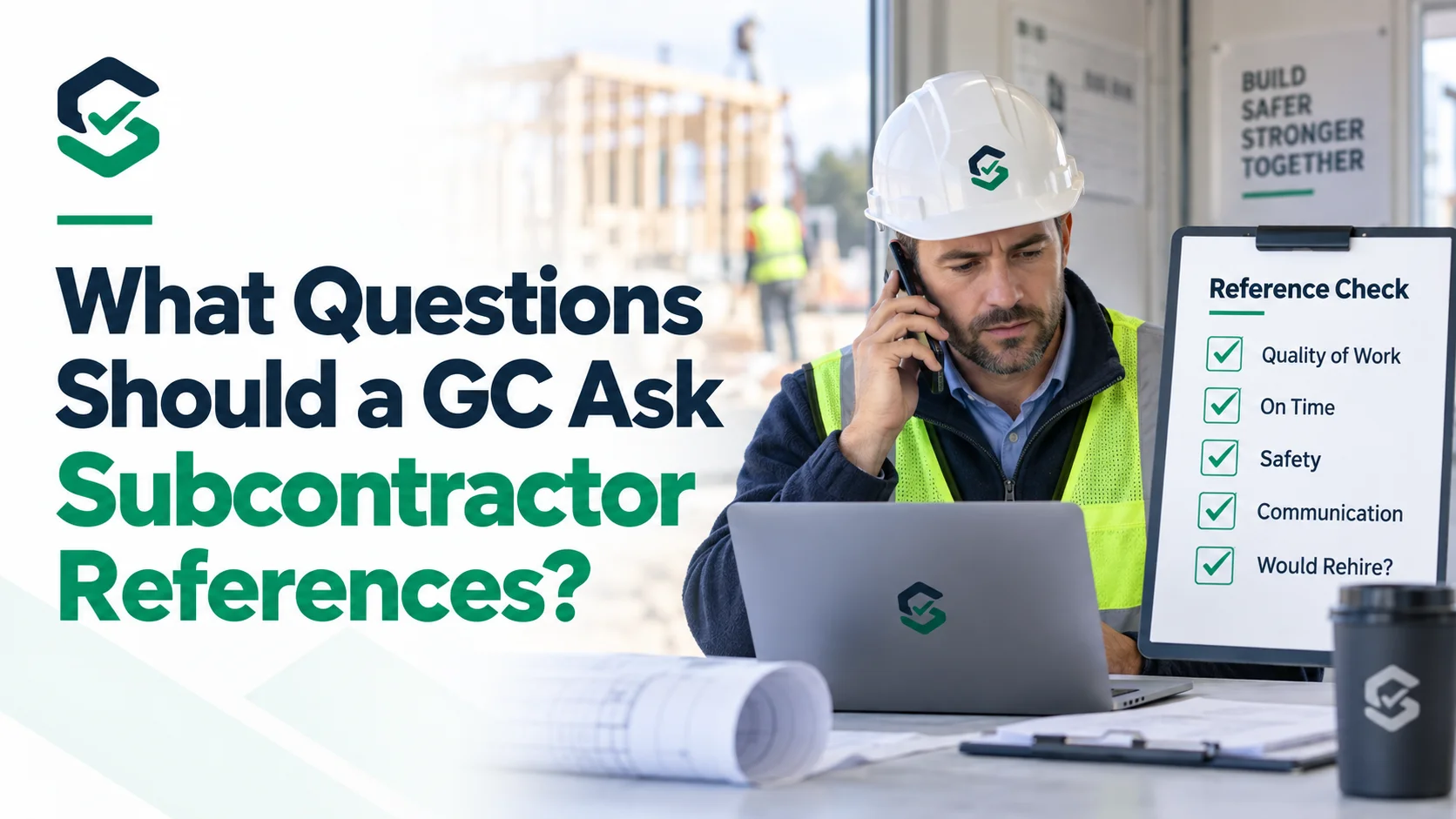
A practical guide to checking subcontractor references, including questions about schedule, quality, payment, safety, change orders, and project performance.
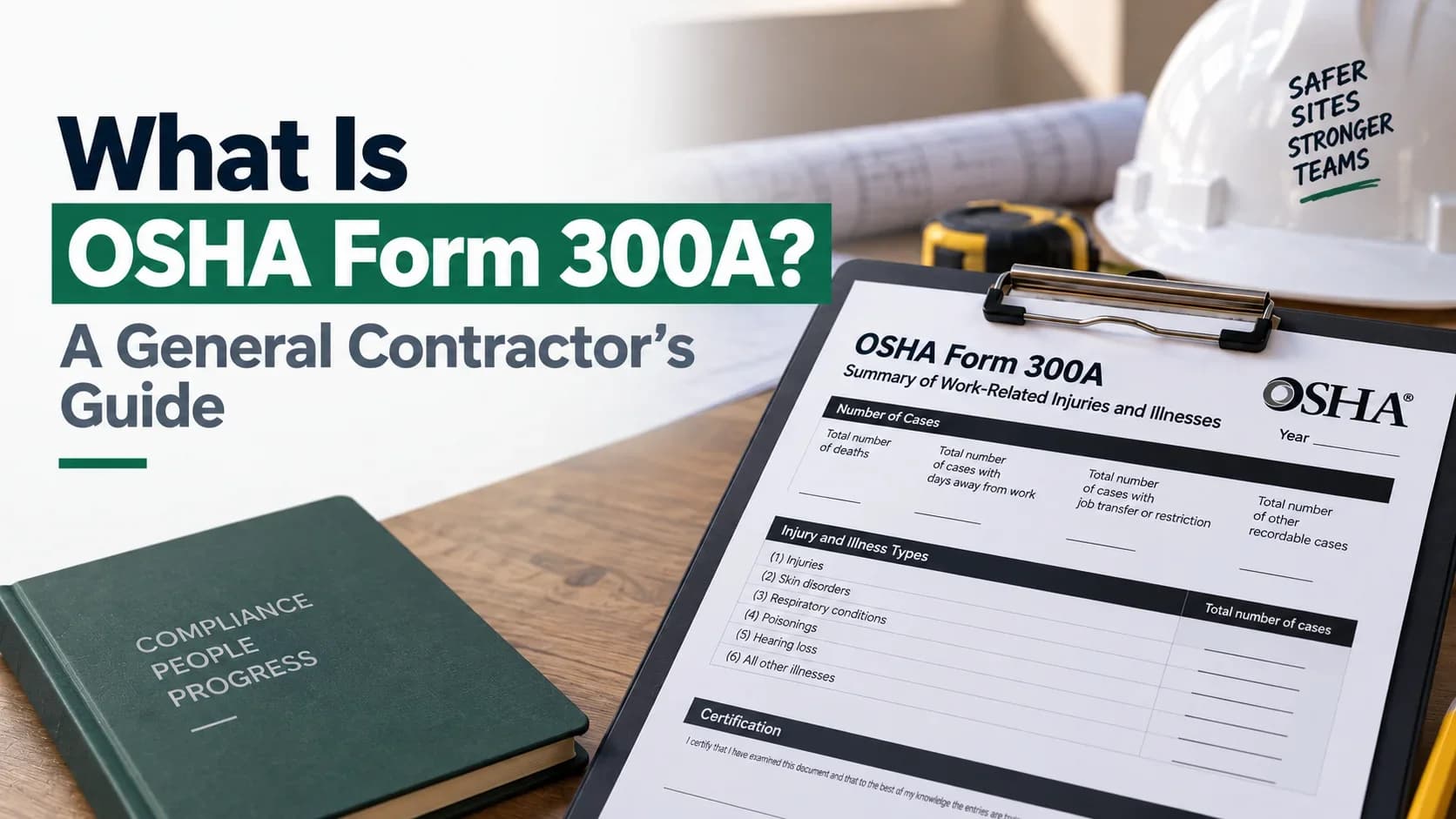
Learn what OSHA Form 300A is, when it matters in subcontractor qualification, what GCs should review, and how to organize safety records without treating the form as a complete compliance assessment.
Learn what Form W-9 does for general contractors, when to collect it from subcontractors, what information to review, how it connects to 1099-NEC reporting, and how to organize W-9 records.
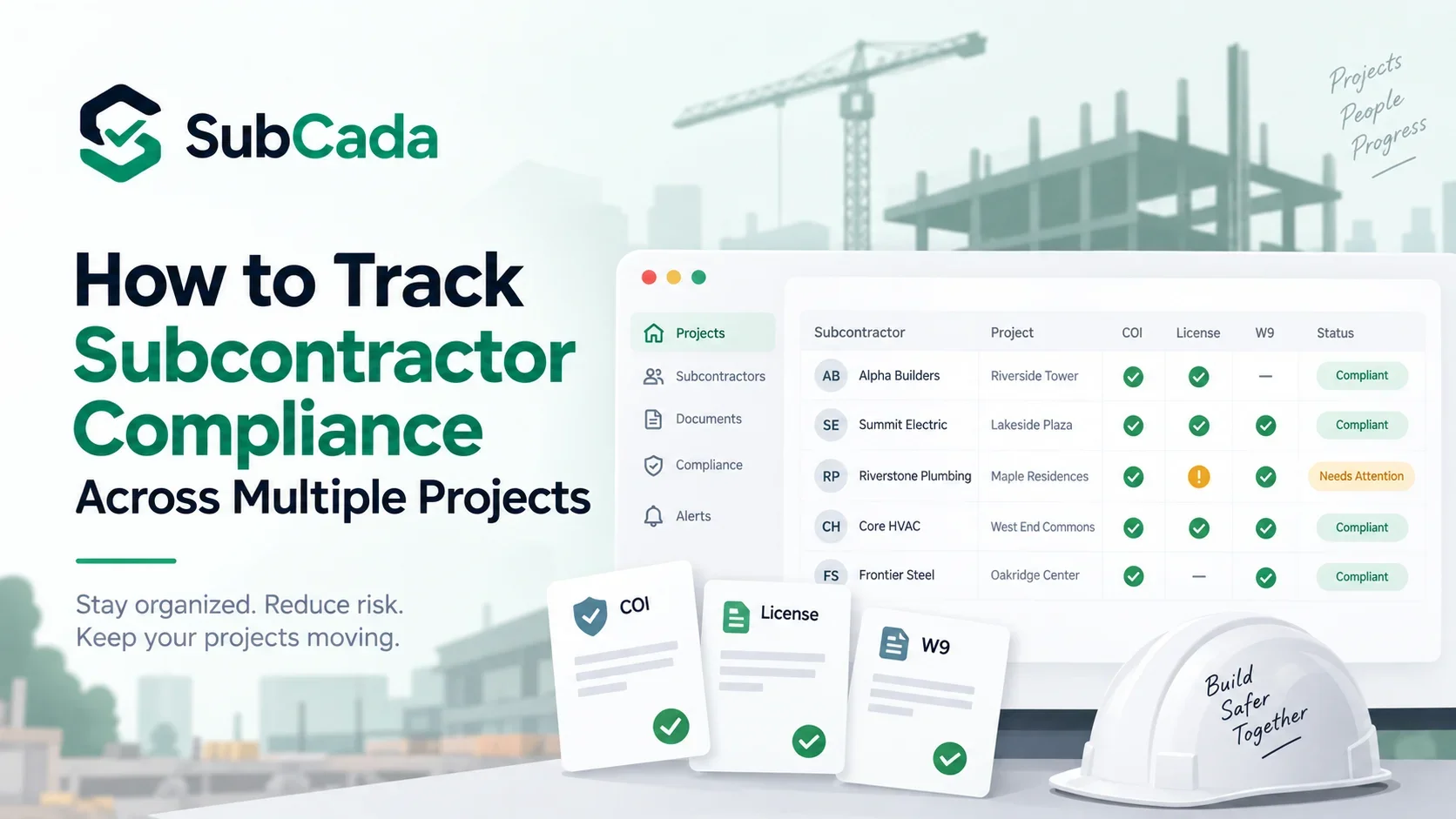
Learn how general contractors can manage subcontractor compliance across multiple projects without duplicate spreadsheets, scattered emails, or outdated document records.
Learn how general contractors can verify subcontractor licenses before work starts, what to check in state records, how to document the result, and how to monitor changes.
Learn what lien waivers do, when general contractors should collect them, the difference between conditional and unconditional waivers, and how to organize the payment-document workflow.