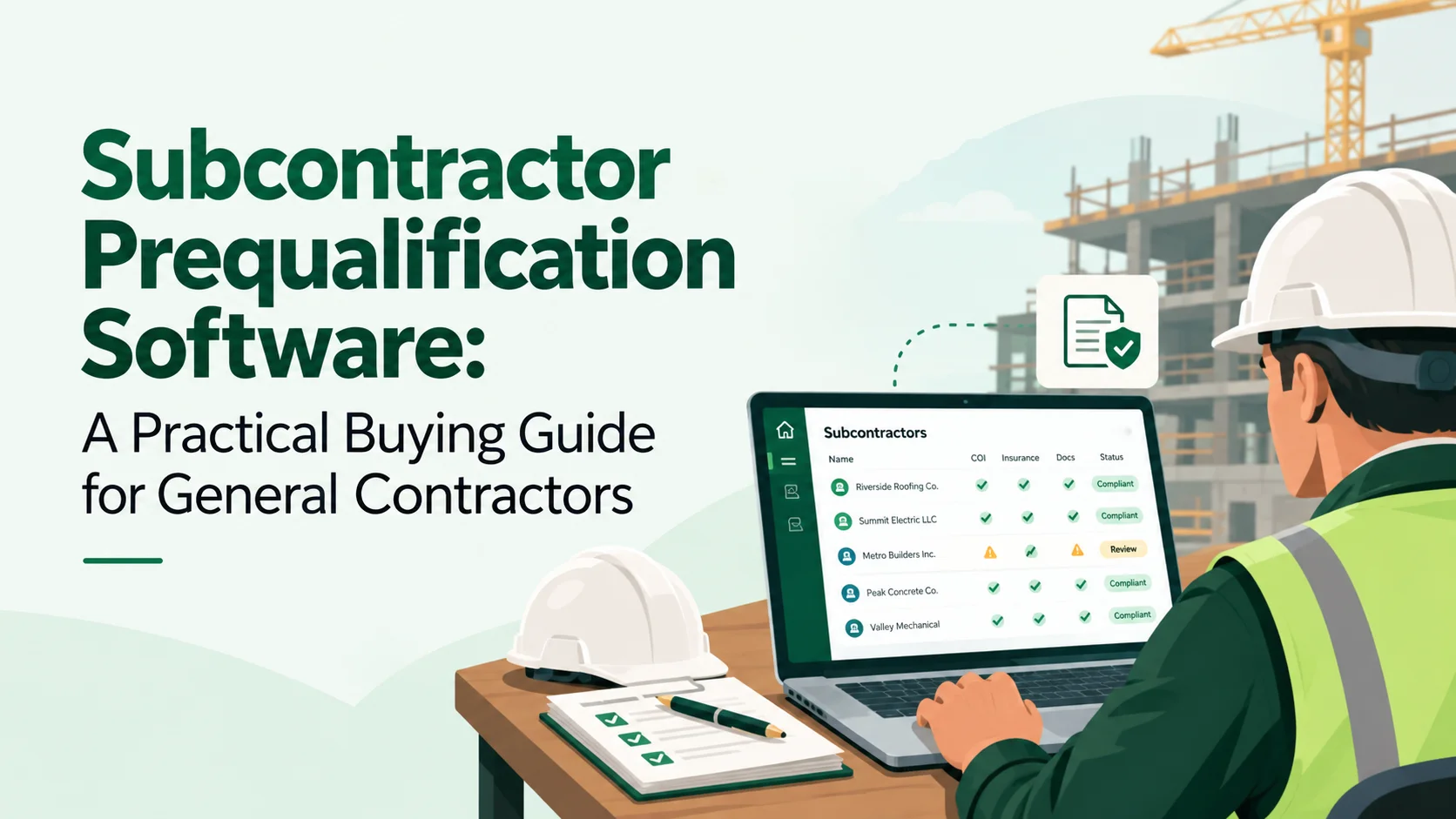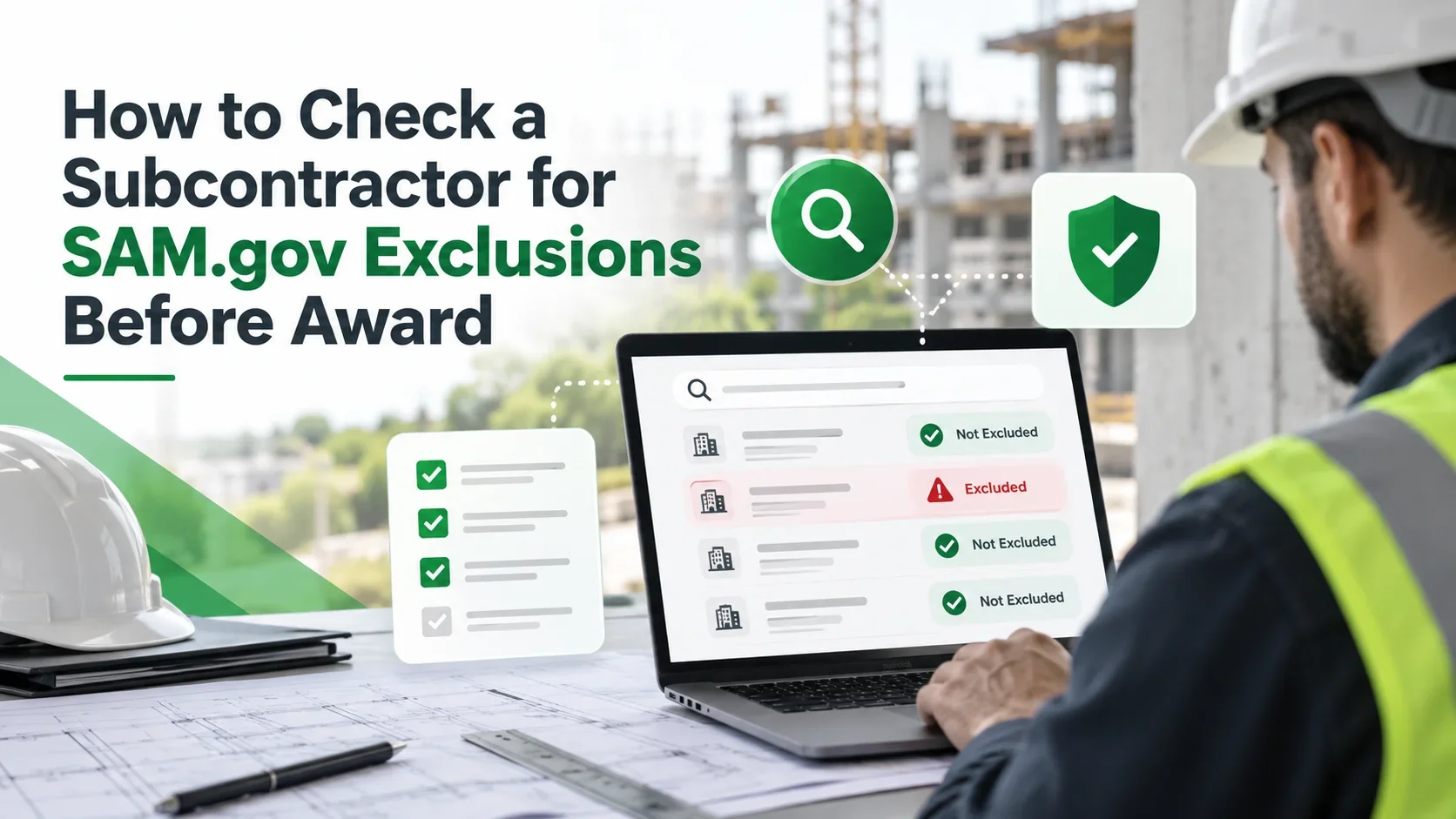


Choosing a subcontractor is not only a pricing decision. Before inviting a trade to bid or awarding work, a general contractor needs enough reliable information to decide whether that company is suitable for the project.
Subcontractor prequalification is the process of collecting and reviewing that information before work is awarded. The strongest process is repeatable: every subcontractor is evaluated against clear criteria, exceptions are documented, and time-sensitive documents such as insurance and licenses are monitored after approval.
Current construction resources describe prequalification as a review of financial capacity, safety, capability, capacity, licensing, insurance, bonding, references, and relevant experience.
What should a subcontractor prequalification process cover?
There is no single universal checklist. Requirements should reflect your contract, project, trade, jurisdiction, owner requirements, and internal risk tolerance. A practical baseline covers:
| Area | What to verify |
|---|---|
| Company identity | Legal name, DBA, address, contacts, entity information |
| Licensing | Required license, active status, classification, jurisdiction |
| Insurance | Required policies, limits, dates, and endorsements |
| Safety | Safety program, incident history, relevant records |
| Financial capacity | Information appropriate to project size and approval process |
| Bonding | Capacity and surety information when required |
| Experience | Comparable projects, references, past performance |
| Capacity | Current workload, staffing, equipment, ability to perform |
| Compliance documents | W-9, certifications, project-specific forms, other requirements |
1. Verify the subcontractor's legal identity
Start with the entity you are actually hiring. Confirm the legal business name and compare it with the name appearing on the insurance certificate, licenses, tax documents, and contract. A mismatch does not automatically mean there is no coverage, but it is a reason to stop and verify the relationship.
2. Check licenses and trade qualifications
Licensing requirements vary by state and trade. Verify any license that is legally or contractually required, preferably against the issuing authority when an online lookup is available. Also confirm that the license classification fits the scope of work.
3. Review insurance against the actual project requirements\n\nFor a detailed explanation of what a COI shows and what it does not, see What Is a Certificate of Insurance (COI)? Complete Contractor Guide.
Insurance should be reviewed as part of the prequalification process, but it should not be reduced to a single “COI received” checkbox. Compare the subcontractor's current insurance evidence with the project or subcontract requirements. Review applicable items such as general liability, workers' compensation, commercial auto, umbrella or excess, additional insured requirements, waiver of subrogation, primary and noncontributory requirements, project-specific coverage, and policy dates.
When the contract requires an endorsement or other policy condition, review the supporting policy or endorsement rather than relying on certificate wording alone.
4. Evaluate safety and risk history
A subcontractor that has strong technical skills but repeatedly fails safety requirements may create avoidable project risk. Your safety review can include whatever information your contract and company policy require, such as a safety program, relevant experience, incident history, training records, or other project-specific information.
5. Check financial capacity
Financial review answers a different question from insurance: can the subcontractor financially support the work they are bidding? Depending on project size, a company may review financial statements, references, credit information, banking information, or bonding capacity.
6. Verify relevant project experience
Ask whether the subcontractor has completed work similar in size, scope, complexity, location, or schedule. References are more useful when the reviewer records what was actually checked.
7. Check current capacity before award
A highly capable subcontractor may still be a poor fit if its current backlog prevents it from staffing your project. Consider workload, staffing, equipment, and the company's ability to execute the scope within the required schedule.
A simple subcontractor prequalification scorecard
| Category | Review question | Status |
|---|---|---|
| Identity | Is the legal entity verified? | Pass / Review |
| License | Is the required license active and appropriate? | Pass / Review |
| Insurance | Does current evidence satisfy the project requirements? | Pass / Review |
| Safety | Has the required safety review been completed? | Pass / Review |
| Financials | Is the required financial review complete? | Pass / Review |
| Bonding | Is required surety capacity documented? | Pass / Review |
| Experience | Has comparable work been verified? | Pass / Review |
| Capacity | Can the subcontractor staff and perform the work? | Pass / Review |
| References | Are notes and outcomes documented? | Pass / Review |
Prequalification should not end when the subcontractor is approved
A company can pass prequalification and later have an expired insurance policy, expired license, changed contact information, or another document that no longer satisfies project requirements.
Connect prequalification to an ongoing compliance workflow: qualify, approve, record required documents and expiration dates, monitor time-sensitive records, request updated evidence before expiration, re-review material changes, and keep the review history available for audits.
Common mistakes
Using one checklist for every trade
Requirements should be risk-based and project-specific.
Treating document collection as verification
Receiving a document is not the same as confirming that it satisfies the requirement.
Ignoring expiration dates
Prequalification is not a permanent guarantee. Time-sensitive records need monitoring after approval.
Approving exceptions without ownership
Record the missing item, responsible person, due date, and final resolution.
Subcontractor prequalification checklist
- [ ] Legal business name verified
- [ ] Contact information verified
- [ ] Required licenses checked
- [ ] License classification matches scope
- [ ] Current insurance evidence collected
- [ ] Insurance requirements compared with contract
- [ ] Required endorsements reviewed where applicable
- [ ] Safety review completed
- [ ] Financial review completed where required
- [ ] Bonding information reviewed where required
- [ ] Relevant project experience verified
- [ ] References checked and documented
- [ ] Current workload/capacity reviewed
- [ ] Exceptions documented with an owner and due date
- [ ] Final approval status recorded
- [ ] Ongoing renewal/expiration monitoring established
Frequently asked questions
What is subcontractor prequalification?
It is a process used to evaluate a subcontractor before awarding work, typically covering company credentials, licensing, safety, insurance, financial capacity, experience, bonding, and capacity.
Is there a standard subcontractor prequalification checklist?
No single checklist applies to every contractor or project. Requirements vary by trade, project, owner, contract, and jurisdiction.
How often should a subcontractor be requalified?
The appropriate interval depends on your procurement policy, contract, project duration, and risk. Time-sensitive documents should be monitored continuously rather than relying only on an annual review.
Does prequalification replace insurance compliance monitoring?
No. Prequalification is an approval step; insurance and other compliance requirements may continue throughout the subcontractor relationship.
What should a general contractor do when a prequalified subcontractor's insurance expires?
Request updated evidence, compare it with applicable requirements, record the review, and follow the company's contractual and operational rules for continued work.
Final takeaway
A strong subcontractor prequalification process answers: Is this subcontractor ready and suitable for this project, based on evidence we can verify?
For contractors managing many trade partners, SubCada can help centralize subcontractor records and time-sensitive compliance documents so the team can see what is current, what needs attention, and what has been reviewed.
This article is general information, not legal, insurance, tax, safety, or regulatory advice. Requirements vary by contract, project, trade, and jurisdiction.