Learn when subcontractor professional liability insurance may be required, which design and professional-service scopes create exposure, and what GCs should verify before approval.
Learn what general contractors should verify when collecting subcontractor workers’ compensation documentation, including certificates, exemptions, policy dates, employer’s liability, renewals, and audit records.
Learn what Contractors Pollution Liability insurance is, when subcontractor work can create pollution exposure, and what GCs should review when CPL is required by a project.
Learn how umbrella and excess liability coverage can increase subcontractor insurance limits, why the terms are not always interchangeable, and what GCs should verify.
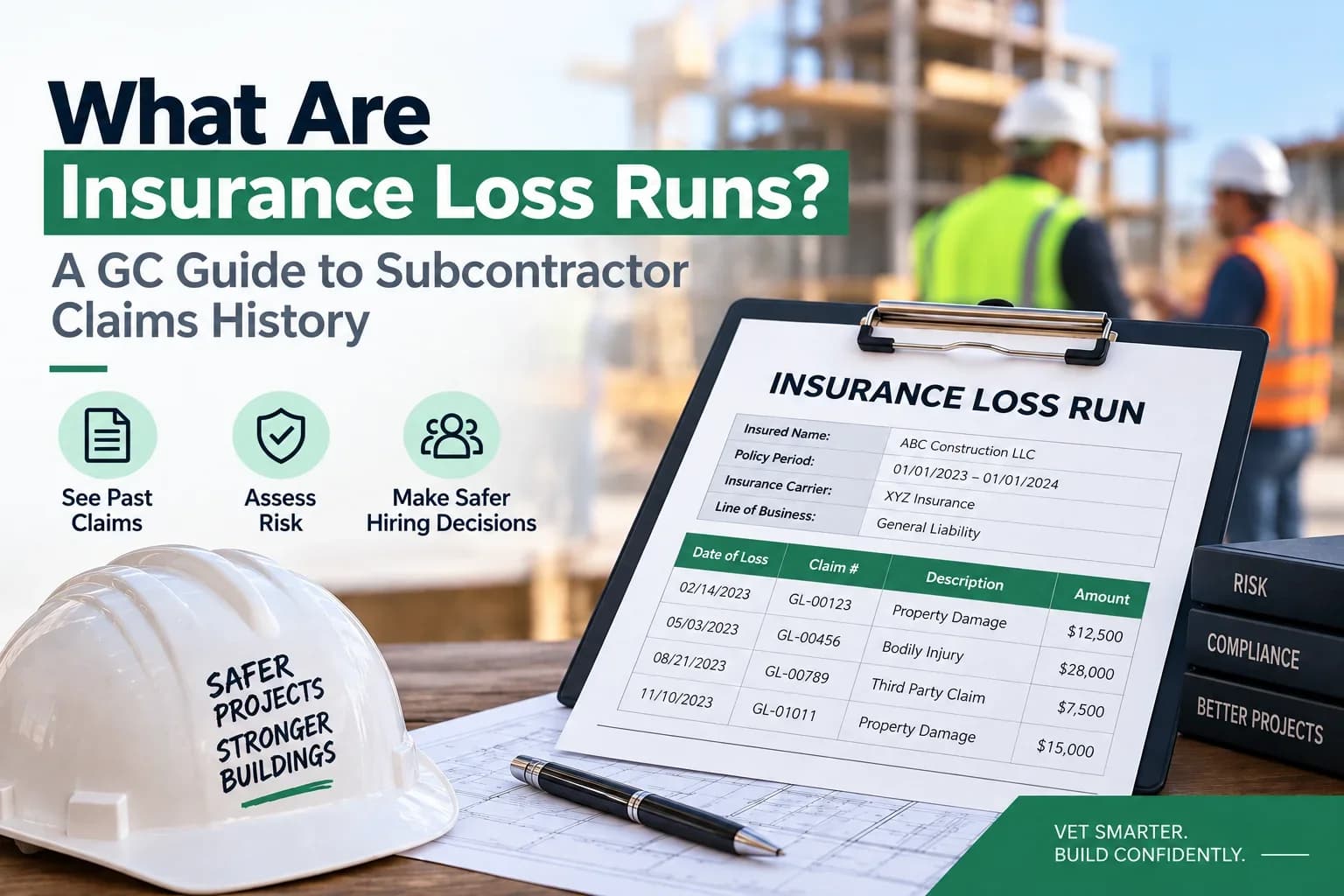
Learn what insurance loss runs are, why general contractors request them from subcontractors, what to check, and how to keep loss-history records organized.
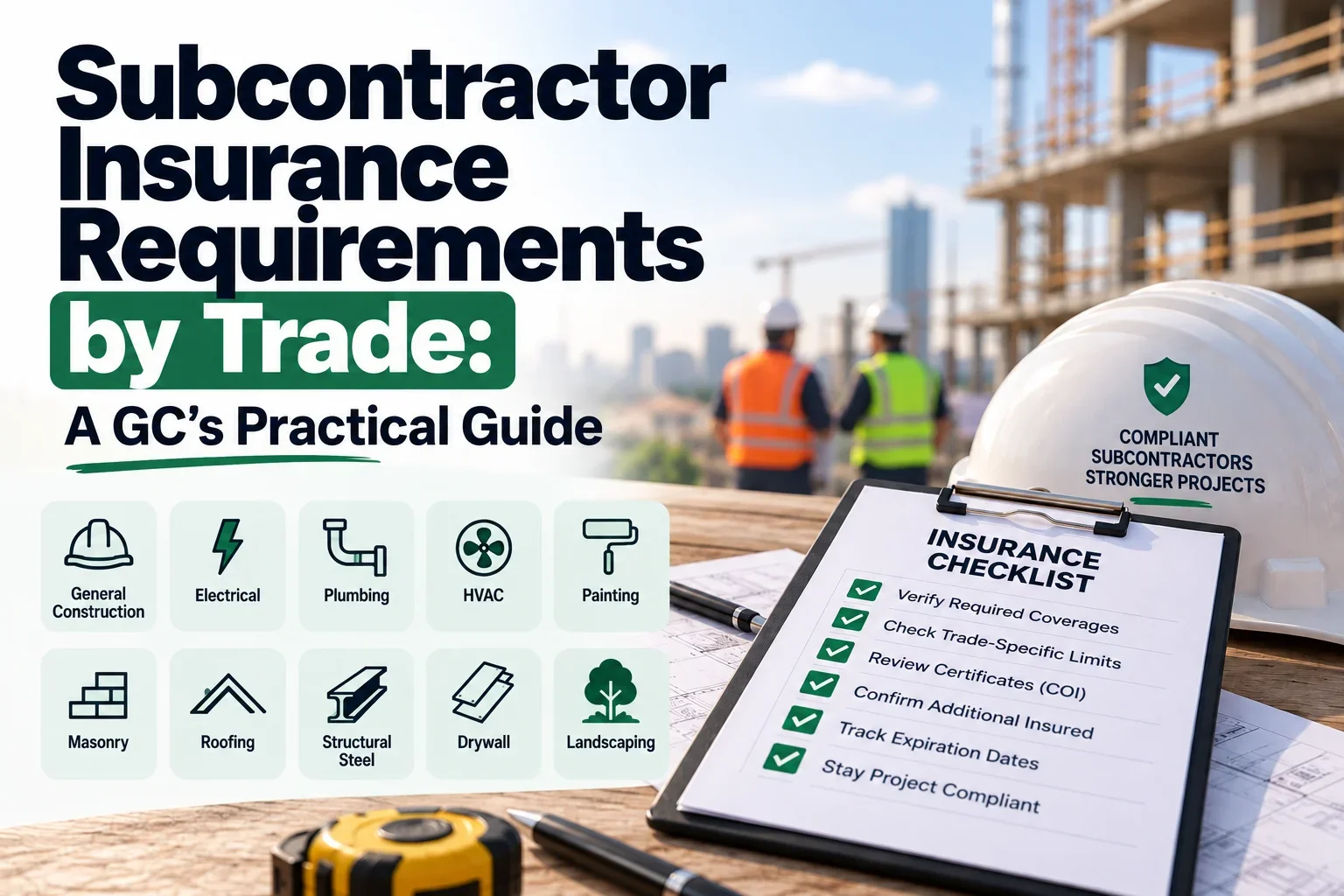
Learn why subcontractor insurance requirements can vary by trade and how GCs can build project-specific requirements without relying on a one-size-fits-all COI checklist.
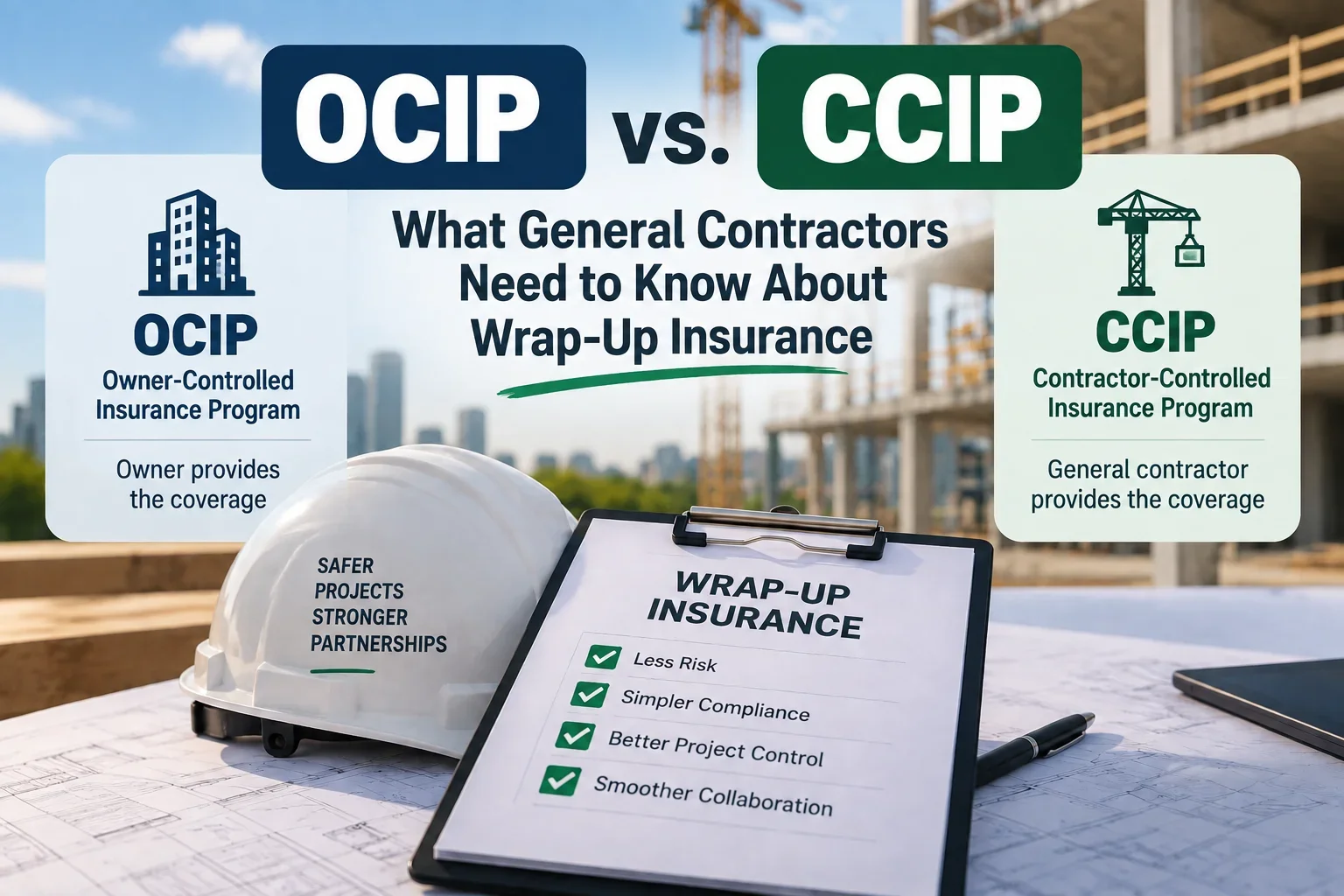
Understand the difference between an Owner Controlled Insurance Program and a Contractor Controlled Insurance Program, what subcontractors must do, and which coverage may still need separate tracking.
Understand the difference between CG 20 10 and CG 20 37 additional insured endorsements, when each applies, what a GC should request, and why completed operations matters.
A practical explanation of primary and noncontributory insurance requirements for general contractors, including what the wording means, how it differs from additional insured status, and what to verify.
Learn what a waiver of subrogation means in construction, why GCs include it in subcontract requirements, what it does, and what to verify before treating it as satisfied.